
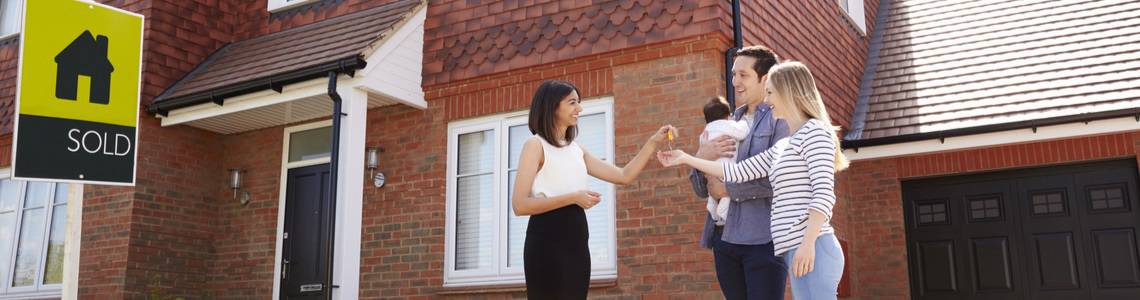
Deciding to buy your first home is exciting. If you’ve never had a mortgage before, however, it is also a bit daunting. Not only do you need to borrow a significant sum of money, but you’ll also need to find the mortgage that best fits your needs.
Work out how much you can borrow
Whilst how much you’ll be able to borrow will vary from lender to lender, it is a good idea to get a rough estimate of what this is likely to be. In this way you can quickly establish if you’re able to buy the type of property you want or whether you need to adjust your requirements.
Work out your moving budget
It’s also a good idea to work out a budget for all your moving costs at this stage, so that you don’t get caught out by any unexpected costs later. Remember to factor in costs such as your deposit, survey fees, conveyancing fees, search fees, stamp duty, buildings insurance and actual moving costs. Add in some extra as a contingency, just in case.
Decide which type of mortgage
There are many mortgage products on the market, so whether you’re looking for a low-deposit mortgage or buy to let mortgage you’ll need to find the one that meets your needs.
There are two main types of mortgage: capital and interest (repayment) ones and interest-only ones. With the former you pay off some of the amount borrowed plus interest each month. With the latter you only pay off the interest so you need to have savings or investments elsewhere to pay off the capital at the end of the mortgage term.
The amount that you’ll pay each month depends on whether you opt for a tracker, variable-rate or fixed-rate mortgage. A tracker will follow changes to the Bank of England’s base rate. A discount mortgage will offer a lower rate than a lender’s standard variable rate (SVR) for a specified period. A fixed-rate mortgage offers a set repayment amount for the period of fix – usually between two and ten years.
When looking at different types of mortgages, take into account the arrangement fee that the lender charges as this varies substantially. This can usually be added to the mortgage, although it will increase your monthly repayments.
Also look out for other features that may or may not be important to you, such as early repayment charges should you repay the mortgage in the first few years, or the capacity to make overpayments without been financially penalised.
Apply for the right mortgage
When you’re ready to apply for your mortgage, there are two options available to you: do your own research and apply for it yourself or use the services of a broker who has in depth knowledge of the industry. If you have the time and knowledge it is possible to find a mortgage using comparison services and preparing the paperwork yourself. Alternatively, you may wish to use the services of a mortgage broker – these specialise in all types of mortgages, from a standard repayment one to a more specialist buy to let mortgage. Ideally, use one who offers advice on products from the whole of the market. Some will charge you a fee should you proceed, while others work on commission but this should be confirmed and agreed with your prior to any application.
Your home may be repossessed if you do not keep up repayments on your mortgage.